



27 Jun Following His Calling
A Buddhist monk’s artistic odyssey from rural Vietnam to globetrotting photographer
It is perhaps too obvious to assert that great photographers capture meaning inside their photographs. It is less obvious, I think, to suggest that the best ones capture meaning outside their photographs, too—their life a lens in permanent focus, an open shutter forever swallowing light. joSon, a distinguished photographer whose images of flowers and nature express the Buddhist values he spent his adolescence in Vietnam practicing, is among the latter group: His entire existence is art; the pictures are just the proof.
“The force that through the green fuse drives the flower drives my green age,” wrote the famed Welsh poet Dylan Thomas. It will no doubt please joSon to know that I blew past my deadline for this magazine because I was busy—no, busy is entirely the wrong word; rather, I was lost—meditating on flowers, which are at best tangential to my assignment, as a firefighter meditating on combustion is tangential to dousing the flame.
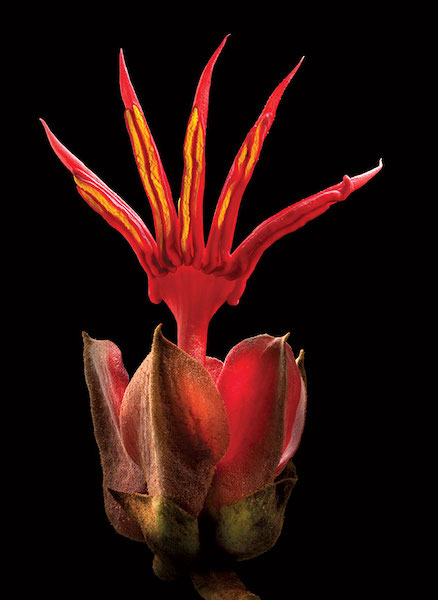
The claw-like flower of Chiranthodendron pentadactylon, aka the monkey’s hand tree
“Flowers are the missing words in our vocabulary,” joSon says on a recent phone call.
His accent reflects the years he spent in the Philippines, Vietnam and California, but his voice contains some fourth, unnamable quality that—forgive me—sways like the blooms he has spent his life photographing.
“Our language is very limited,” he continues, “but flowers are a language of their own, and we use them to express how we feel.”
How joSon feels about flowers contains, like Whitman, multitudes. There is almost nothing he will not do to communicate with—and for—his muse. The day we speak, he is preparing to drive more than 700 miles from his home in San Francisco to Death Valley in search of the rare Oenothera californica eurekensis, commonly called the evening primrose. He has heard from a local contact that the flower—which grows only on the remote slopes of the Eureka Valley Sand Dunes within the national park, and only blooms when conditions are perfect—is in fact in bloom.
“They’re supposed to last another week,” he says. “But a storm just came in, so who knows? Nothing is guaranteed.”
Impermanence is a core philosophy of Buddhism, and it is a lesson joSon has learned at each stage of his itinerant life. As a child of mixed race living with his single mother in the Philippines, joSon felt unmoored. Though he never met his father, an African American soldier who was killed in Vietnam during the end of the war, joSon felt drawn to the country where the man fought and died—the same country where his maternal grandmother lived. In 1983, when he was 10 years old, joSon traveled there to spend a summer with her.
“I spent a great deal of time at a Buddhist temple helping my grandmother, who was a regular volunteer there,” he says. “That summer turned into a lifetime of introspection and self-discovery.”
Nearing the end of his trip, joSon convinced his mother to let him remain at the temple, which had an educational program for boys.
“When I was introduced to Buddhism, I felt at peace and at home in the temple,” he recalls. “I told my mom, ‘I don’t want to go back to the Philippines. I want to become a Buddhist monk.’”
Refuge From an Unforgiving World
The temple offered more than just a way to understand the world—it also offered protection from it.
“The world is an unforgiving place,” joSon says. “Given my multiethnic background, I often felt ostracized as a young child in the Philippines, and the outside world in general. Life was challenging for me. In the temple, people don’t judge you; they accept you for who you are.”
In Buddhist tradition, boys can study and work in the temple until they turn 18, at which age their master makes the crucial decision: stay and become a monk or be released back into the world.
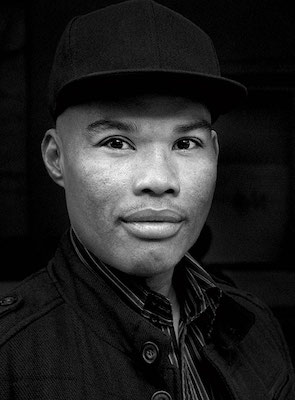
joSon portrait, photo by Holger Keifel
For eight years, joSon slept on the floor, forsook most material goods and studied under his master. When he was not studying, he worked in the gardens, watering, weeding and tending to the flowers and plants. Crucially, he also discovered an old film camera, which the monks used sparingly to document historical art pieces displayed throughout the temple.
“It was a valuable thing for the temple,” joSon says of the alluring device. “They don’t like people touching it—I convinced them to let me use the precious device.”
Observing his preternatural skill, the monks assigned him to be the caretaker of the camera, and their sole photographer. He was allotted one roll of film per month: 36 frames.
“It was my job to make sure that roll of film would last at least a month,” he says. “It’s expensive to buy. Every picture has to have a reason and a purpose. I believe this was the beginning of my learning to process the world through the lens of a camera.”
By his late teens, joSon had settled into a rhythm: student, photographer, gardener and mentor to the younger cohort of boys, whom he would teach art and literature. Becoming a monk was his path; the temple, his home. He planned never to leave.
When he turned 18, his master informed him that he could remain in the temple for three more years, but he would not be a monk. His path, the master said with kindness, was elsewhere.
“They told me I don’t have to be in the temple to do good work,” joSon remembers. “They told me I could do better work somewhere else.”
Still, the news was devastating.
“I was shocked,” he admits. “On one hand, you feel your foundation is gone. On the other, you know that life has already chosen the journey for you; you are just living.”
In his last three years before turning 21, joSon absorbed these final lessons: “Home is never a building. Your temple is inside you. When you leave, you don’t really leave.”
When he turned 21, joSon packed his meager belongings, bid farewell to his family of the last 11 years, and left. But he didn’t really leave.
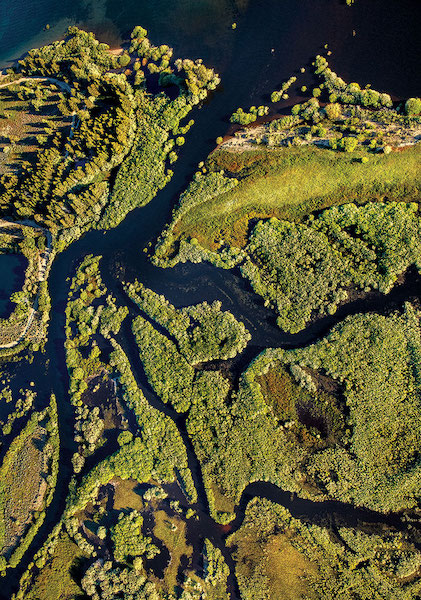
The Upper Truckee Marsh from above
‘How Am I Going to Survive?’
Back home in the Philippines, joSon was adrift. His mother, a doctor, encouraged him to study science, which he did listlessly. In the summers, he would return to Vietnam and the old temple, now just a tourist on a path that was no longer his.
His birth country wasn’t his, either. “The Philippines never felt like home to me,” joSon says.
After three difficult, dislocated years, he decided to pursue a fresh start in California, where he had relatives. His family in Sacramento hosted him until he could enroll in the community college in San Jose, home to a large Vietnamese population, whose culture always felt more closely aligned with his own. In San Jose, joSon rented a cheap room, made new friends and began his classes—the first tentative steps on a new American path that stretched, however dim and uncertain, before him.
And then he visited Lake Tahoe.
Within six months of landing in Sacramento, joSon felt a powerful new force leading him away from what was supposed to be an exciting chapter in the Bay Area.
“When I first saw Tahoe, I thought, ‘This is the most beautiful thing ever,’” he says. The next thought was, “Why would I live anywhere else?”
He transferred to Lake Tahoe Community College, where he began a two-year degree in hotel and restaurant management. The college, he soon discovered, also offered photography classes, which he hoped might provide a small reprieve from what would likely be a tedious education, followed by a demanding career in service and hospitality.
joSon says there was one question that drove every decision in this early chapter of adulthood: “How am I going to survive?” The answer, he believed, was to find a practical career. “Growing up, I thought art was for the rich: people who have time to sit and dream. Poor people cannot afford that. Art was the last thing in my mind.”
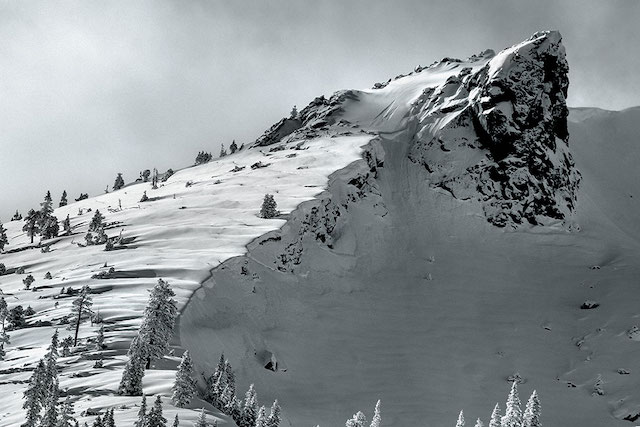
A craggy peak near Sierra-at-Tahoe
While living as an artist was out of the question, he thought learning to take better pictures might offer some small consolation for the grind of adulthood. As he did as a boy in the temple, joSon sought out the keeper of the camera and lodged a formal request.
“joSon walked into my life,” recalls Pat Leonard-Heffner, who has taught photography at Lake Tahoe Community College for almost 50 years. “He walked up to me and told me he wanted to borrow a camera. ‘If you take my class,’” she remembers telling him, “‘you can borrow a camera.’”
He agreed and signed up for Photography 1. Then Photography 2, followed by Photography 3. He enrolled in Landscape Photography. He joined a class trip to Death Valley, launching what would become a lifelong love affair with the national park. He worked as a lab aid in the darkroom. He missed nothing.
“He took every class that we had,” Leonard-Heffner says. “I was impressed right away. He was great at pretty much everything—and really driven.”
As driven toward photography as he was away from a career in hospitality.
“Photography became my life very quickly,” says joSon, whose images now grace magazine covers and hang in galleries and private collections around the world. “The community college helped me to discover who I am. It helped me to think bigger and see beyond my limited space. A couple teachers told me I can be the person I want to be. They gave me courage to dream.”
Drawn to the Lens—Again
Lake Tahoe Community College gave him the courage to dream, but his Buddhist upbringing in Vietnam gave him the wisdom to look.
Scott Lankford, author of the national award-winning book Tahoe Beneath the Surface, remembers rubbing shoulders with joSon among the literati of San Francisco, where the burgeoning photographer had returned to study fine art and launch a career as an artist. The writer was initially skeptical.
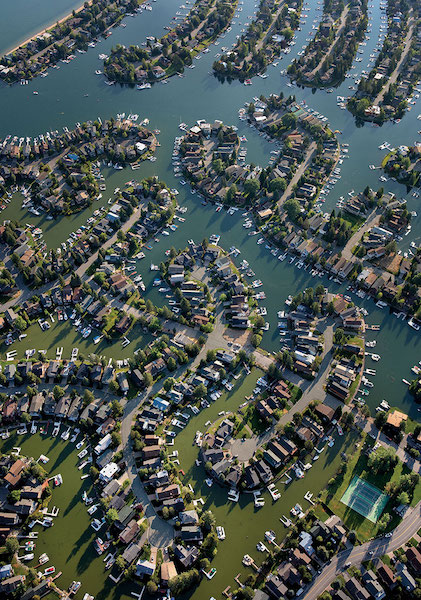
Tahoe Keys
“I think I was slightly condescending,” he admits with a chuckle. “Lots of people are photographers. But every time I turned around, he was on a cover somewhere.”
What Lankford admired most in joSon’s art—what I admire most—is the transcendent quality evident in his attention to detail. The way his art understands, rather than merely depicts.
“His photos have this timeless quality of teaching you how to see something in that spiritual light of enlightenment,” Lankford muses. “That sounds like a big statement, but I really think the best of his photos are quite astonishingly exactly that way. There’s a depth to joSon’s images that transcends time, and I think that comes from his training as a Buddhist monk.”
When it comes to describing his own art, joSon is less comfortable than his admirers, though he has learned to navigate publicity as his career has grown. When asked about his relationship to being in front of the camera, he admits that his least favorite assignment in Photography 1 was taking self-portraits.
“The camera was a way for me to hide,” he says. “In my earlier work, I hardly ever wanted to do interviews or talk about my photography. I’m much more open now.”
Though you will not find his face in his work, he insists they are self-portraits all the same. When he created his first book, a stunning, sensual gallery of flowers in bloom titled joSon: Intimate Portrait of Nature—which began as a class assignment while working toward his master’s degree at San Francisco’s Academy of Art University—he sought to capture more than literal forms.
The photographs, he says, “are not just of flowers; they are portraits of ourselves. Through them, we learn more about ourselves. That’s why I photograph them so close and detailed. It is our self-reflection.”
The explanation is as explicit as joSon is likely to get about the meaning and purpose of his art. For deeper understanding, one is invited into a closer study of his faith.
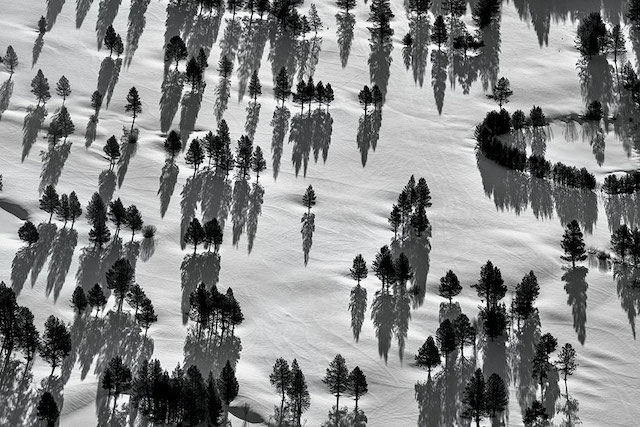
A snow-covered Lake Tahoe Golf Course
“Buddhist philosophy says plants deserve the same respect,” he says. “‘Save the environment’ is a modern expression, but protecting and preserving the world around us is a fundamental element of Buddhism.
“I use my photography as a way to inspire people and show them how beautiful the world is,” he adds. “In a way, I’m a propagandist for nature.”
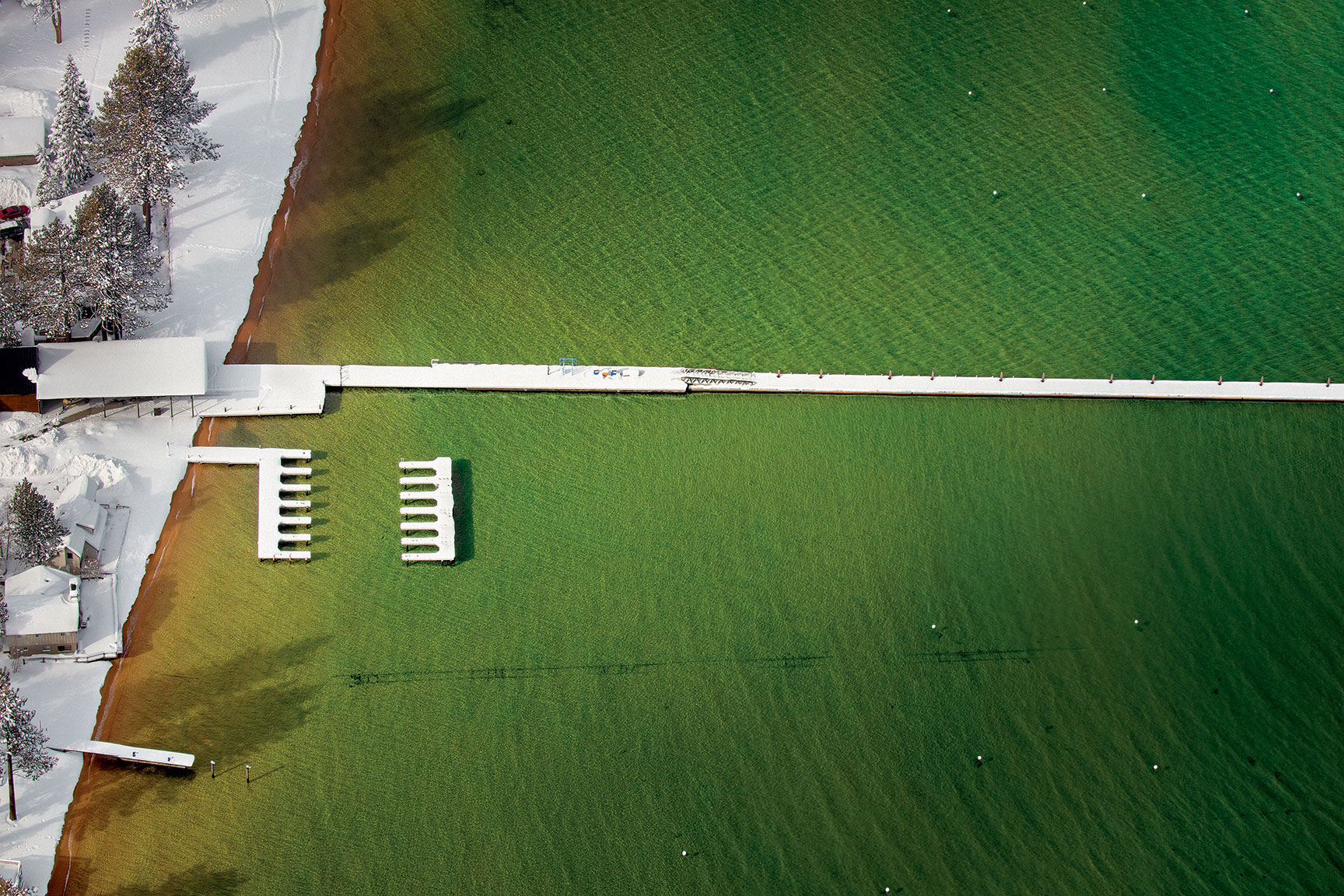
His most recent propaganda for nature is a project tentatively titled “From Above Lake Tahoe, Looking Down.”
“People come to Lake Tahoe, but they don’t really understand it,” he says. “[I want] people to see from a bird’s-eye view how vulnerable the lake is: the smoke, the burn scars. I want to show that Lake Tahoe is more than just Emerald Bay; it is also an endangered ecosystem.”
Though he is done shooting for the project, joSon says he is still retouching his photos and connecting with publishers, with plans to send a proposal in the coming months. It is one of many projects he is juggling.
“I get bored really quickly,” he says. “If I’m not pushing myself, I become bored.”
Blossoming Talent
“From Above Lake Tahoe, Looking Down” is not the first time joSon has dangled from an airplane for a picture—and it likely won’t be the last (“He sees something beautiful and he stops worrying,” Lankford says)—but the photographer cannot resist the quiet, deliberate study of his first love.
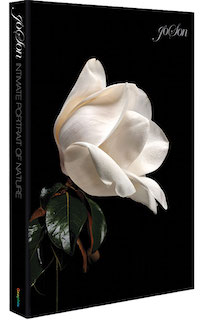
joSon: Intimate Portrait of Nature
“I told myself years ago, ‘I’m done with flowers,’ and here I am working on part two of Intimate Portrait of Nature,” joSon says.
Among a certain breed of photographer, degree of difficulty is one of the main criteria for a great picture. While joSon is no stranger to discomfort and danger, it is not a prerequisite to his process. He is just as likely to rummage through a compost bin as he is to drive overnight to Death Valley. Beauty, he insists, is not hard to find. It may be in your trash can right now as you read this.
“We live in a world where everything is thrown away so fast,” he says. “Even the most beautiful things.”
He recounts a recent wedding he attended with a friend, where bouquets that so gracefully adorned the tables early that evening were tossed on the curb by nightfall. He finds the same negligence in neighborhoods, cemeteries and home improvement stores. Whenever he can rescue a flower, he will. His studio, he explains, has at times been so full of plants that people will drop theirs off, assuming he’s a plant rescue.
“We throw them away when we have no value for them anymore,” he says. “I still find beauty in them.”
The rescued flowers fill the pages of “Recycled Beauty,” a chapter in his forthcoming book. He is shooting on film to reclaim what he calls “slow photography.”
“I am using a 4×5 camera, and the film is hand-developed by me using analog processes that connect me back to my days in the temple,” he explains.
Leonard-Heffner and Lankford are unsurprised by his return to flower portraiture—though he never really left it.
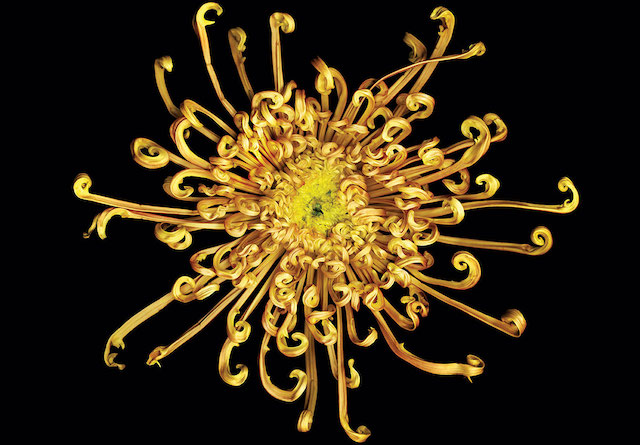
Spider chrysanthemum
“Flowers have been throughout his career his signature,” Lankford says. “He speaks their language.”
Leonard-Heffner remembers the young artist photographing flowers tirelessly, even early in his academic career at Lake Tahoe Community College. But more than the subject in front of the camera, she remembers the man behind it, whose painstaking process allowed no room for mediocrity.
“I’ve seen him start projects and go back until it was absolutely right,” she says. “It’s not good enough for him to just go through the process. He would refine many times.”
The lifelong teacher cannot resist a floral metaphor of her own when reflecting with pride on the artistic arc of one of her brightest pupils.
“That’s the thing about teaching,” she muses. “We spread seeds of knowledge around and we really don’t know which ones are going to take root and become so much more than what you could have imagined. I always knew he would be successful, but I never dreamed he would be creating the work he is now.”
Memories of Beauty
As a writer raised by Christian parents, it can be tempting to look for the secret meaning hidden in the text. Signs and wonders reveal divine inspiration. Around every corner waits a new cryptic message, like clues in a cosmic caper. Life is not a passage as much as an endless investigation, for which death is both the final mystery and the final answer.
An hour on the phone with joSon soothes a lifetime of feverish eschatology.
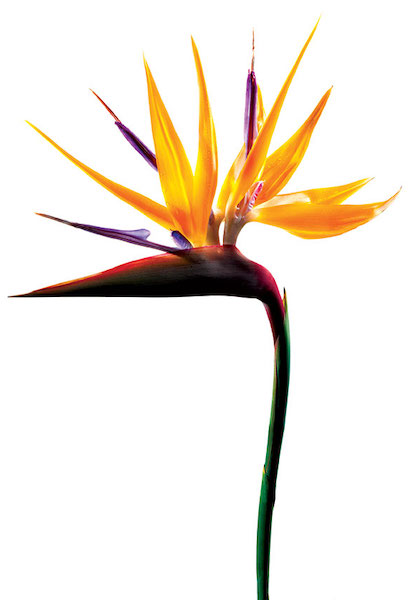
Bird-of-paradise
“Life is not a choice that you make,” he says. “It is a journey.”
He proceeds to explain about his earliest experiences with flowers—not the philosophical or religious thesis undergirding his passion, for which I keep artlessly probing—but the memories of beauty that remain with him all these years later.
“When I was young, in the temple behind my room, there was a garden with a big magnolia tree,” he begins. “Every evening, we’re supposed to close the windows to keep the mosquitoes out. But when the flowers are in bloom, the smell of it is like perfume through the whole garden, and I open the window and lie there in my mosquito net taking in the flower, a sweet, vanilla smell.”
No matter how hard the day was, or how much work there was to do, the smell of the blossoming magnolia tree through his window at night melted away any lingering stress or unhappiness.
Decades later, the artist, who splits his time between San Francisco and Tahoe, will occasionally find himself driving late at night in the East Bay, with his windows down, and the scent of magnolias that grow throughout Berkeley and Oakland will fill his car like a physical presence.
“It brings me way back to the temple, and I remember everything,” he says. “The senses bring back memories. The mind becomes a blueprint.”
I ask Lankford to share memories of his favorite flower, and the loquacious author pauses for the first time in the call and reflects on the question.
“My mother loved lilies of the valley,” he says after a long moment. “She’s passed away now. Of the things of hers I kept, one of them is a glass plate that has lilies of the valley engraved in it.”
Leonard-Heffner is also reminded of her mother, who had nine children and used to cope with the responsibility by tending to her lilacs in the garden.
“We always had lilacs,” she recalls. From inside her home, she peers out the window and says her own lilacs are in bloom as we speak. They grace her sidewalk, and when she enters or exits the house this time of year, she is transported back to her childhood, and her mother out in the garden.
“The smell of a lilac brings me back to all that,” she says. “It communicates a lot of things when you smell them.”
‘Super Happy’
I can relate. Growing up in Canby, Oregon, where the phrase “The Garden Spot” is engraved just below the population count on a sign at the edge of town, I was surrounded by the sight and smell of flowers.
In the summer, I would ride my bike to Swan Island Dahlia, a local farm less than a mile from my childhood home, where Mount Hood can be seen looming above row after colorful row of dahlias. My aunt visited from Upstate New York one August, and we all went to the nearby farm as a family, where she loved the flowers so much that she ordered bulbs to be shipped across the country to put in her own sprawling garden.
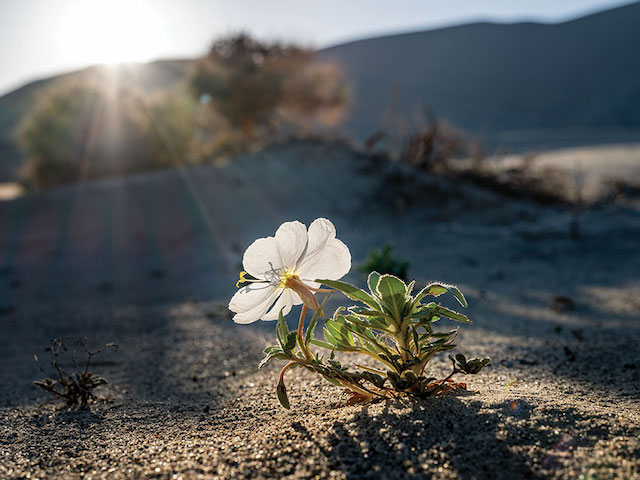
The rare Eureka Dunes evening primrose
William Carlos Williams wrote, “Oh strong-ridged and deeply hollowed nose of mine! what will you not be smelling?” and I think of a young joSon, curled in his mosquito net, windows flung open, drunk on the perfume of the magnolia tree.
I think of joSon as a young man, forced to leave the temple in Vietnam to follow his own path, and I am reminded of what Mary Oliver wrote in her poem, In Blackwater Woods.
“You must be able to do three things: to love what is mortal; to hold it against your bones knowing your own life depends on it; and, when the time comes to let it go, to let it go.”
I think of joSon now, a successful artist in his 50s, still giving it all for a flower. A few days after our call, I received an email from him, just back from his hunt in Death Valley for the rare evening primrose.
“I was able to find the rare flower I was looking for. I’ve been trying to find and photograph it for at least seven years, and this is the first time I’ve ever seen the plant or its blooms [in] over two decades of photographing the park. So, I’m super happy.”
I am, too.
Find more of joSon’s work on his website, as well as images from his book, Intimate Portrait of Nature, and follow him on Instagram, @joSonphoto
Michael Rohm is a writer and musician based in Portland, Oregon. He looks forward to reliving a part of his childhood this summer when the dahlias bloom.
No Comments