




01 Mar On the Front Lines of California’s Wolf Recovery
In Sierra Valley, an unprecedented summer of livestock depredations rattles a rural ranching community and forces state officials to adjust management strategies
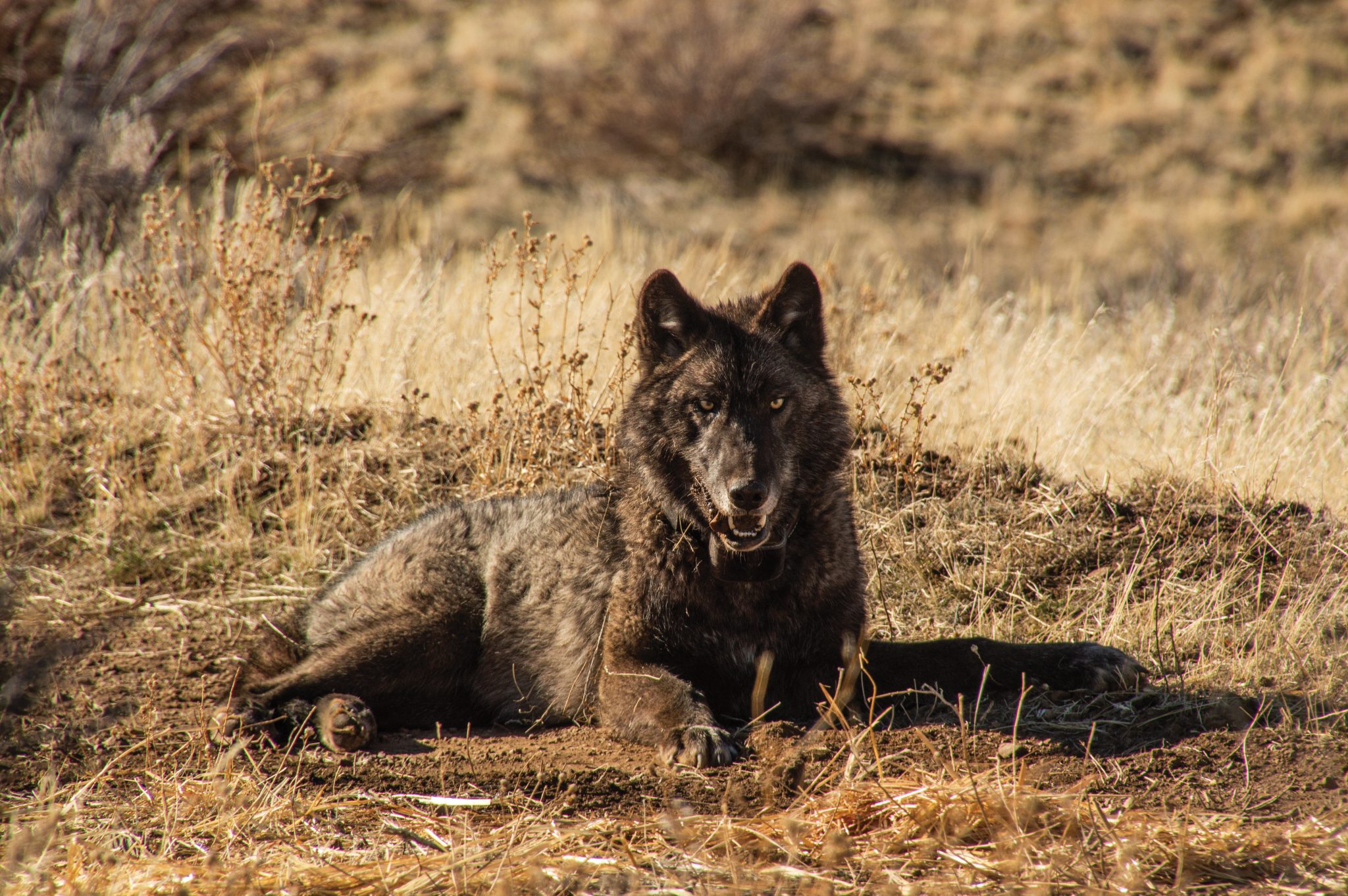
The most exceptional case of wolf-livestock conflict in modern American history unfolded in the summer of 2025 in the pastoral Sierra Valley, about 50 miles north of Lake Tahoe, as a single pack of gray wolves killed at least 88 cattle.
“The Beyem Seyo Pack was one of the most livestock-predating packs in the history of Western wolf recovery,” says Arthur Middleton, professor of wildlife management at UC Berkeley, who is currently studying gray wolves in the state.
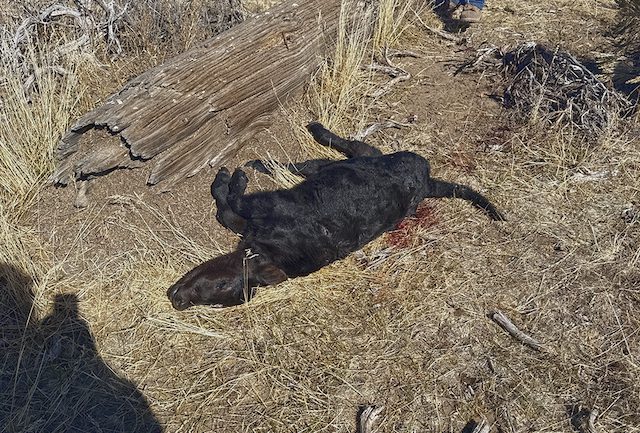
A wolf casualty in Loyalton on October 10, 2025
The Beyem Seyo Pack, consisting primarily of a breeding pair, six pups and several juveniles, wrought havoc throughout Sierra Valley, killing cattle daily from May onward before the California Department of Fish and Wildlife (CDFW) ordered the lethal removal of three of the wolves in October.
The months-long incident laid bare a paradox at the heart of the wolf’s recovery story in California.
To be sure, the reintroduction of these iconic animals has been a rousing success, as their numbers continue to grow, with a minimum of 70 wolves in 10 separate packs in California, according to the CDFW’s latest report.
However, with that success comes conflict with the people and economies of California’s rural communities, whose residents have expressed outrage at being treated with indifference or outright hostility by state agencies.
On the other side, passionate wolf advocates demand that ranchers change their landscape management practices to make space for one of the most potent symbols of the American wild to flourish once again.
The Return of the Wolf
When OR-7, the wolf colloquially known as Journey, crossed the border from Oregon into California in December 2011, it became the first documented wolf sighting in the Golden State since 1924. After traveling more than 1,000 miles through three Northern California counties while garnering an international following, Journey trekked back through Southern Oregon, where he found a mate in the Rogue River-Siskiyou National Forest, who gave birth to pups in spring 2014.
In the summer of that year, anticipating the potential migration of wolves into the state, the California Fish and Game Commission voted 3-1 to extend endangered species protection to gray wolves.
In 2015, the CDFW released a photo of a breeding pair of gray wolves consisting of two adults and five pups, dubbed the Shasta Pack. Wolves were officially back in California.
Since then, the population has increased steadily to the delight of wolf advocates and the consternation of ranchers and rural residents concerned for the safety of their pets and children.
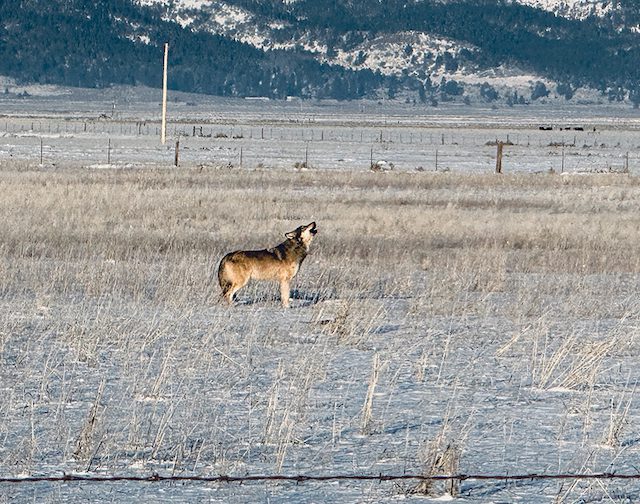
A gray wolf howls amid the wide-open expanse of Sierra Valley, photo by Lenny Stahl, courtesy Paul Roen
“We’re now at a point in California wolf recovery, similar to other states, where we are entering an exponential growth curve,” Middleton says.
The CDFW reports 10 active packs in California, primarily dispersed throughout the northernmost counties (the exception is the Yowlumni Pack, which was identified in 2023 in the Sequoia National Forest, nearly 200 miles south of Lake Tahoe).
While a conservative estimate puts the total population around 70, the CDFW states that, “There may be an unknown number of individual wolves that have dispersed from packs or adjacent states.”
On February 1, 2026, the CDFW’s wolf tracker showed that a member of the Harvey Pack, based in Lassen County, had crossed into Truckee’s Tahoe-Donner neighborhood, prompting warnings from law enforcement for residents to “take appropriate measures to protect” pets and livestock and be on the lookout.
“Truckee doesn’t have the same dynamic as the rancher community to the north,” says Kyle Vickers, public information officer with the Truckee Police Department. “But people need to seek out information from the CDFW and be aware.”
The issue underscores how Californians, especially those in rural areas, will have to adapt to a new reality as wolves reestablish their presence across the state.
“The thing that leads me to believe California can sustain wolves is that these animals are resilient,” Middleton says. “They are good at colonizing new places, reproducing and persisting in tough conditions. Their resilience leads me to believe there are a whole lot of places throughout California where they can be sustained.”
The growth trajectory for gray wolves in the state is cause for celebration for wildlife proponents like Amaroq Weiss.
“For anyone who appreciates the wild, what it means to be in the wild, wolves are the essence of that,” says Weiss, the senior wolf advocate at the Center for Biological Diversity. “They are the animal that represents the wild, probably more than just about any other organism you can think of.”
For Sierra Valley ranchers who lived through a chaotic summer rife with unprecedented livestock depredations, the wolf’s return takes on a more ominous cast.
Ingredients for a Killing Spree
The events that transpired over the summer were foreshadowed in April 2025, when the adult breeding pair killed an elk and a deer in Sierra Valley, one in a fenced-in backyard and another on the front porch of a home.
“Our concern was that these animals had gotten so habituated to the community, what was going to happen once the cattle [arrived],” says Sierra County Sheriff Mike Fisher.
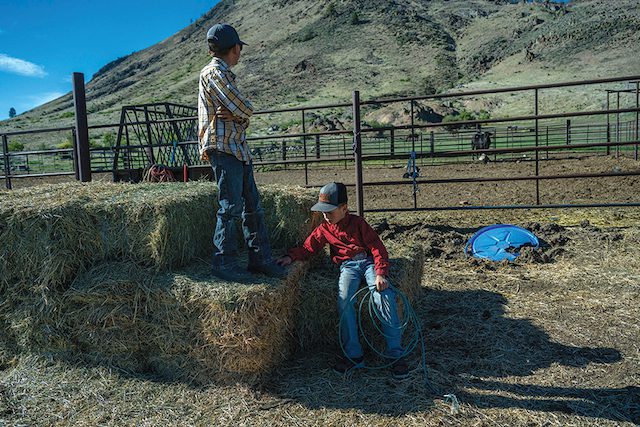
Waylon Greenwood, 9, looks toward the location where he spotted wolves as he and his brother Walker, 7, play on hay bales at their family’s Sierra Valley ranch in May 2025, photo by Renée C. Byer / ZUMA Press Wire
Sierra Valley is the largest subalpine valley in California, covering about 590 square miles of a down-faulted basin, similar to the Tahoe Basin. In fact, 10,000 years ago, Sierra Valley was a lake approximately the size of Tahoe. Surrounded by mountains ranging from 6,000 to 8,000 feet in elevation, the rich grassland and sagebrush mixture on the valley floor has played host to extensive cattle ranching operations for more than 170 years, forming the core of the region’s agricultural economy.
Most of the grazing operations occur during the summer, when the cattle population swells to more than 10,000. Thus, when Paul Roen, a longtime rancher and Sierra County supervisor, caught wind that the Beyem Seyo Pack had established a den near his house, he anticipated problems.
“The wolves had been north of us for a couple years, but when they established themselves here in the valley, everything changed,” Roen says. “Nobody should have to live through what we lived through this summer. It was absolutely unimaginable.”
Rick Roberti, president of the California Cattlemen’s Association, who owns and operates a ranch in Sierra Valley, says he first heard of a wolf depredation in the area in August 2024. But after the Beyem Seyo Pack moved in, the killings became more frequent.
“At first they killed sporadically—every two or three weeks or so—so you kind of forgot in between,” Roberti says. “But then later in the summer, it got to a point where they were killing every day. It was almost like an obsession to kill.”

Rick Roberti, president of the California Cattlemen’s Association, drives his truck with a pair of binoculars to help spot members of the Beyem Seyo Pack that terrorized Sierra Valley throughout the summer of 2025, photo by Renée C. Byer / ZUMA Press Wire
Over the summer, the CDFW officially documented 88 kills by the Beyem Seyo Pack, mostly by the breeding pair and one of the older juveniles.
For context, Oregon, which has approximately 25 wolf packs and a minimum of 200 individuals, experienced 69 cattle kills during the same time frame, while Montana, home to more than 1,000 wolves and some 180 packs, reported 52 depredations.
Middleton cautions that apples-to-apples comparisons between states can be misleading, due to differences in population density and the dispersal of cattle throughout the landscape, but even figures within California show the Beyem Seyo Pack was especially proficient in its attacks.
Roen is steadfast that the number is much higher than the figure reported in Sierra Valley, as he says he responded to approximately 160 investigations of dead cattle and that the evidentiary bar for a confirmed kill was ludicrously high.
“There has never been that amount of carnage caused by three animals anywhere in the world and tolerated,” Roen says.
While the three wolves were killed in October, the Sierra Valley ranchers argue that the delay by CDFW leadership cost the community valuable time, money and mental wellness by bureaucratic obfuscation and unnecessary delays.
“They lied and they gaslighted,” Roen says. “I lived it daily.”
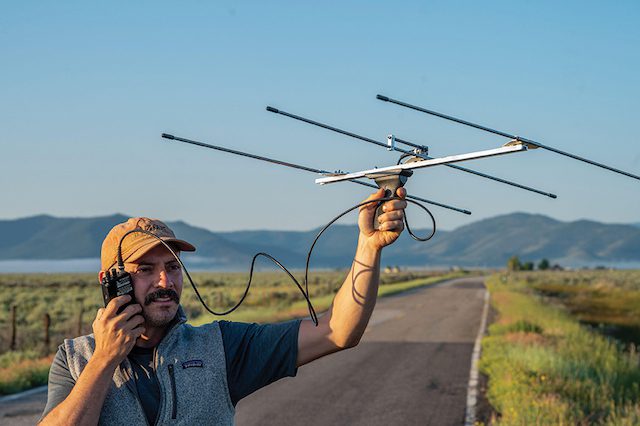
Axel Hunnicutt, chief wolf biologist and gray wolf coordinator for the California Department of Fish and Wildlife, listens to a VHF telemetry receiver in Sierra Valley in June 2025 to determine whether it is picking up signals from collared wolves, photo by Renée C. Byer / ZUMA Press Wire
Roen alleges the botched response was due to recently departed CDFW Director Chuck Bonham, saying most of the agents on the ground were doing the best they could given operational constraints.
“Chuck was a master manipulator and would not give them the authority to kill these wolves,” Roen says.
The CDFW did not make anyone from its leadership available for an interview, but Axel Hunnicutt, the CDFW’s state gray wolf coordinator, acknowledges the agency was put in a tough spot.
“We’re stuck in a space where a very small number of animals can have a very significant impact on agricultural business, livelihoods and perceptions around safety in rural communities,” Hunnicutt says. “On the other hand, removal and other aggressive actions … go against their (the wolves’) protections.”
The scale of depredations increased even after the CDFW formed a strike team of about 20 staff members in June, deploying them to Sierra Valley to scare off the wolves with nonlethal hazing methods.
According to a December presentation by Bonham during a wildlife commission meeting, the agency dedicated 18,000 staff hours to an around-the-clock operation that included chasing the animals on ATVs, using noise devices and installing fences, among other tactics. But it was all to no avail, as the wolves kept killing.
“They let Fish and [Wildlife] spend 18,000 hours up here with rubber bullets and drones, and we proved it didn’t work,” Roen says.
Hunnicutt agrees that the agency’s actions ultimately proved insufficient.
“What we saw in Sierra Valley this last year is that even when you had multiple teams of law enforcement out there 24/7, it still didn’t work,” Hunnicutt says.
‘Smart, Elusive and Strong’
Meanwhile, the pace of the depredations began to take its toll on the ranchers.
“I hung up the phone with grown men crying more than once,” Roberti says. “It was just because there was this feeling of, ‘What are we going to do? I can’t shoot it. I can’t take the chance of going to jail or losing the ranch or paying a $100,000 fine.’”
Roen says he lost countless nights of sleep trying to protect his livestock.
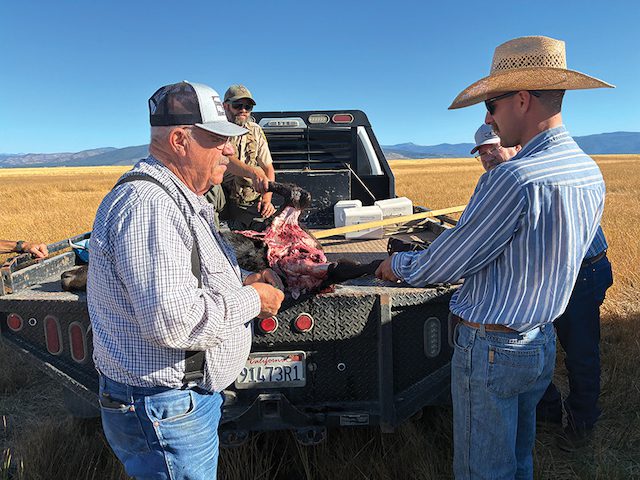
Paul Roen, left, has been a prominent voice amid the conflicts between wolves and livestock in Sierra Valley, photos courtesy Paul Roen
“I’d get home at 3 or 4 in the morning, sleep two hours and leave again,” he says. “It wasn’t once in a while—it was every night. There were people sleeping in the beds of pickup trucks all night because the wolves were right above their homes.”
Roen, Fisher and Roberti all say they did not blame the wolves themselves, as they understand that the animals have evolved to hunt as efficiently as possible.
“Wolves are opportunistic, and they are economically rational, if you will, with their energy,” Middleton explains. “They are going to eat what takes the least energy and effort to get. So when there is not a lot of widely available and vulnerable wild prey, but there is very available and vulnerable livestock, you’ve got a precarious situation.”
After months of unsuccessful efforts, the ranchers also express a grudging respect for the wolves’ cunning intelligence, as they proved amazingly adept at evading them and the wildlife agents despite the use of night-vision drones and other technologies.
“They are smart, elusive and strong,” Roberti says. “Even with the drones flying above them, they’d still find a way to kill.”
The pack kept pace despite the efforts of the ranchers and CDFW by learning the pattern of their movements and when shifts would change over.
“They learned to come out right after the shift change in the morning,” Roen says. “They’d run out, kill a calf and go back.”
Costly Killings
The economic impacts of wolf depredations are uncomplicated on the surface, as California allocated $3 million in 2021, with a portion to be paid to ranchers who lose cattle to wolves. However, the ranchers say the program is insufficient for the scale of events this past summer, and that the reimbursement process is opaque, overly bureaucratic and hampered by a key fact: They believe the true number of wolf depredations is undercounted due to the high evidentiary bar.
“The program is going to help some, but I have some ranchers who get only one out of every five kills confirmed, so that’s not a great deal,” Roberti says.
For wolf advocates like Weiss, the ranchers failed to take enough proactive steps before the animals arrived. She notes that most of the allotted money was earmarked for various preventative measures, several of which have proven effective in other Western states.
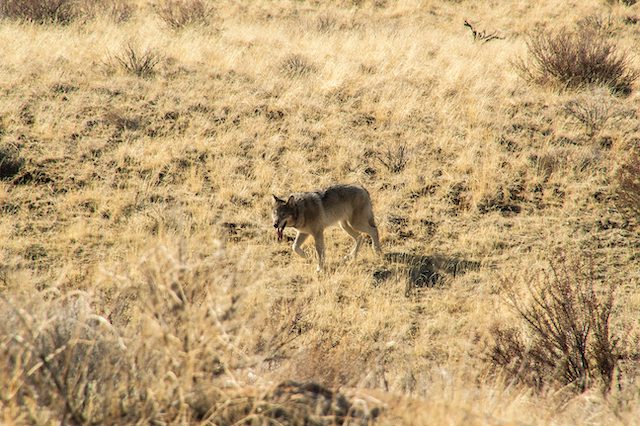
A collared male wolf born in the 2024 litter of the Beyem Seyo Pack pictured in January 2025, photo by Malia Byrtus, courtesy UC Berkeley California Wolf Project
“There are ranchers and farmers living in Michigan, Wisconsin, Minnesota, Idaho, Montana, Wyoming, Washington, Oregon, Arizona, New Mexico … we’ve had this grand experiment of things you can do to coexist living with wolves,” she says.
California provided grants for placing red flags on fences, range riding, purchasing livestock guard dogs and altering animal husbandry practices to time calving with the birthing cycles of wild prey.
“You time things so that you’re birthing when wild prey give birth, so that there’s elk calves and deer fawns out there for wolves to go after first,” Weiss says.
Weiss further notes that out of the grants dispersed to California ranchers to undertake preventative measures, not one was pursued by ranchers in Sierra Valley.
“You don’t wait until the conflicts are starting and are getting intense to suddenly start using your arsenal of nonlethals,” she says. “You do it when you first learn that wolves are now in the area.”
Susan Dewar, president of the California Wolf Foundation, which seeks to reduce conflict between wolves and livestock to facilitate ecological recovery, argues the ranchers were given insufficient tools at the outset.
“Part of what happened in Sierra Valley is that we haven’t given ranchers the tools for aggressive hazing that might have reduced conflict or redirected the pack to natural prey,” Dewar says.
Roen agrees.
“We had 27 dead cattle before we were allowed to chase them on a four-wheeler,” he says.
Dewar contends ranchers should be allowed to use rubber bullets and pyrotechnics to frighten wolves away from their property.
“If you love wolves, you don’t want them eating cattle,” she says.
While Weiss argues that only CDFW professionals should be allowed to use rubber bullets and other aggressive hazing techniques, as people could inadvertently kill wolves, Dewar says ranchers should be empowered to protect their property and train wolves to keep to the wild.
“Ranchers are the ones on the ground,” she says. “The CDFW is severely underfunded. You have one person covering multiple counties. It would be nice to see the agency delegate authority on a case-by-case basis to county trappers or individual ranchers for more aggressive hazing.”
Dewar’s organization is also trying to raise money to provide ranchers with the tools they need to prevent a repeat of Sierra Valley’s 2025 summer.
“I’m concerned about the processing time of state grants,” Dewar says. “We had a rancher who needed help immediately—there were wolves on her land every night. It was going to take about eight months for the state to pay. If someone needs to hire a night herdsman right now, they can’t wait eight months.”
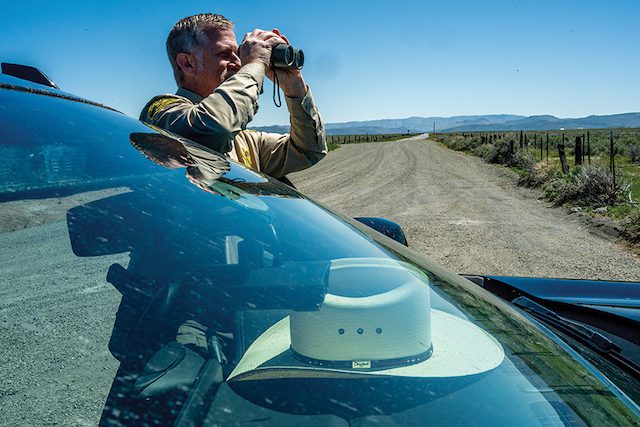
Sheriff Mike Fisher uses binoculars to search for wolves in Sierra Valley in May 2025, photo by Renée C. Byer / ZUMA Press Wire
The costs for ranchers to hire additional manpower and equipment to protect their livestock are significant, and there are other negative impacts, as well, such as reduced calving due to predator stress and the diminished girth of cattle from constantly moving.
A 2025 UC Davis study found that one wolf can cause anywhere between $69,000 and $162,000 in both direct and indirect losses to a ranching operation.
The study, which looked at the cattle-livestock interactions of three California wolf packs, including the Beyem Seyo, corroborates what Sierra Valley ranchers experienced.
“Paying for the dead cow is the smallest part of the damage,” Roen says. “I now have a $10,000 night vision drone and an $8,000 pair of night vision binoculars. This isn’t what a ranch pickup is supposed to look like, loaded with $20,000 of night vision equipment.”
Fisher says if the wolf problem persists on the scale of what occurred in Sierra Valley, ranchers could decide the entire enterprise is simply untenable.
“If our local ranches have to spend more money to protect their cattle than they get when they sell their cattle, well, then the cattle industry is going to go out of business,” he says.
Lethal Action
In October, after a month of trying and failing to haze the wolves, the CDFW hired a federal contractor from Wyoming. According to Roen, the contractor initially shot and killed a different juvenile wolf from a helicopter, after which he hunted from the ground, using a tranquilizer dart to render the animals insensate before euthanizing them.
The management action prompted outrage among wolf advocates and a sense of relief among Sierra Valley’s ranchers and residents.
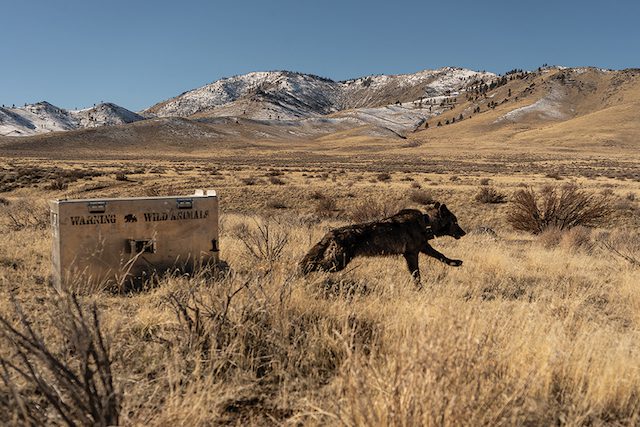
A newly collared wolf from the Beyem Seyo Pack is released close to where she was captured by a CDFW helicopter team in January 2025, photo by Malia Byrtus, courtesy UC Berkeley California Wolf Project
“The killing stopped immediately upon the removal of those animals,” Roen says. “That’s what people need to understand.”
The ranchers believe lethal removal of problem wolves needs to be a part of the CDFW’s toolkit as it moves forward with its wolf management program.
“We’re not wolf haters,” Roen says. “We’re asking them to remove the problem wolves.”
While Roberti acknowledges that many ranchers would like to see wolves eradicated from the landscape, the more reasonable community members understand they are here to stay in California.
“We’re going to have to work as a group,” he says.
The Sierra Valley ranchers emphasize that they are not willing to live through another summer like the last one, and it will be increasingly difficult to convince people to refrain from taking matters into their own hands.
However, Weiss argues that lethal removal is just a temporary Band-Aid, and without a commitment from ranchers to alter their practices, the depredations will continue.
“We don’t support killing wolves as a means to resolve livestock conflicts,” she says. “I’m just not sure that there were any good answers in this really extreme situation. But the science shows that killing wolves does not resolve livestock conflicts.”
Instead, killing a pack can worsen conflicts over the long-term, as packs split into smaller units, making it more economical for wolves to chase livestock rather than elk or deer, which typically requires larger pack numbers.
“If you kill an entire wolf pack, you will halt the conflicts for that year or the next year as well,” Weiss says. “But where that is happening is good wolf habitat and you basically created a vacuum. They’re going to come back in, and if you haven’t changed your husbandry practices, you are setting yourself up for potentially more conflict.”
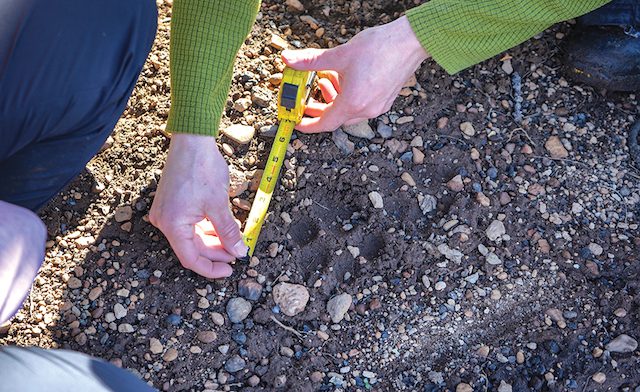
A field technician from the California Wolf Project measures a wolf track found during a winter cluster search in Sierra Valley, photo by Malia Byrtus, courtesy UC Berkeley California Wolf Project
Part of the difficulty for Sierra Valley is the nature of the landscape.
Unlike Yellowstone National Park, for example, where there is an abundance of native prey balanced against relatively few domestic cattle, and where the introduction of wolves had a positive impact on the natural ecology by rebalancing the elk population, Sierra Valley has less wild game. Instead, it has a bounty of cattle roaming wide-open terrain.
Hunnicutt says it’s unfortunate that California’s first contact with wolves in a century came in the northeastern portion of the state, where the game-to-livestock ratio isn’t as ideal as in other parts of the state.
“There’s plenty of places for them to expand to—down to the Sierra, over into the north coast, into the Marble Mountains and even into some of the coastal ranges,” he says. “But they followed the east side of the Cascades because that is where they are present in Oregon.”
The biologists agree that more elk, deer and other natural prey are in higher abundance—both in raw numbers and relative to the cattle—in the western portions of the state, but the wolves have yet to travel there.
“There are questions about the condition and abundance of the deer in Sierra Valley and across wolf range in California, and whether declines or limitations in deer and elk in certain areas are playing into the level of livestock predation,” Middleton says. “There are parts of the landscape where it’s going to be really hard to sustain wolves because of the limited native prey and the availability of domestic livestock.”
Middleton works as a principal investigator with the California Wolf Project, an initiative within UC Berkeley’s wildlife program, which supports lethal removal for problem wolves that engage in chronic depredation of livestock.
“Lethal removal is an active tool in wolf management in every other U.S. state and Canadian province where gray wolves occur,” the project stated in a news release. “It is utilized even in areas where the species is otherwise protected by federal or state law.”
Living With Wolves
For Dewar, the overriding takeaway from last summer’s events is that all stakeholders are going to have to come together to formulate durable solutions and management practices to prevent another nightmare scenario.
“For everyone’s best interest, people need to come to the table and compromise to find a path forward,” she says.
The CDFW developed a three-phase wolf management plan in 2016, with the first phase focusing heavily on monitoring and protecting gray wolves as a tenuous population grew. Now that the population has reached ostensibly sustainable levels, the agency is moving into the second and third phases—expansion and management, affording wildlife managers a larger array of options to address conflicts.
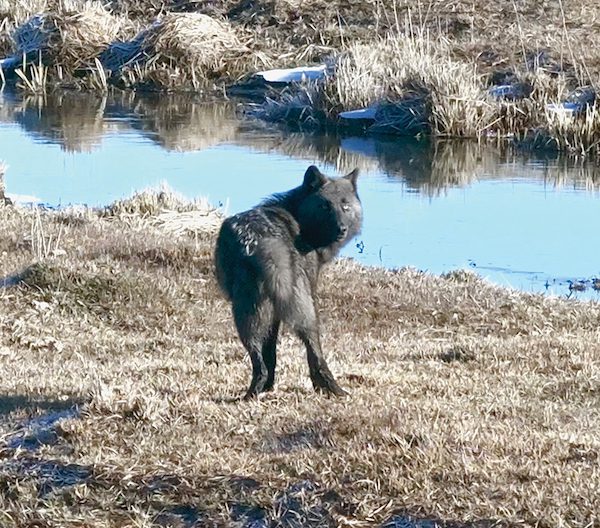
Despite repeated efforts by the California Department of Fish and Wildlife to ward off gray wolves that were killing livestock in Sierra Valley, members of the Beyem Seyo Pack continued to kill throughout the 2025 summer, photo courtesy Paul Roen
Ranchers would like more power to use aggressive hazing measures. Fisher has advocated for allowing local law enforcement officials to initiate hazing operations and lethal removal at their discretion, similar to how they manage mountain lions and bears. Wolf advocates would like the CDFW to reserve the exclusive rights to such actions.
Hunnicutt spoke to Tahoe Quarterly on the same day the California State Legislature deliberated over ways to address wolf-livestock management.
The CDFW does not have the necessary staffing to carry out hazing techniques across the vast landscape where wolves reside.
“We have some limited-term and some seasonal staff, but by and large, there’s only two full-time wolf staff in the state,” Hunnicutt says, adding that his primary responsibility is as a biologist, which requires the capture and collaring of wolves, performing counts and tracking pack movement, along with other duties.
One solution, Hunnicutt says, is for the CDFW to partner with appointed wildlife liaisons in each county, who can be the point-person on the ground and potentially perform the aggressive hazing techniques necessary.
“My hope is that we’ll learn from Sierra Valley and be able to act more quickly, implementing tools and strategies that allow us to be more proactive in managing wildlife conflicts,” Hunnicutt says.
The CDFW will look to achieve that goal under new leadership, as Chuck Bonham resigned to become the California Executive Director of The Nature Conservancy. During the last meeting of the CDFW Commission, Bonham indicated the wolf conflicts had taken a toll.
“I feel like it’s affected my health,” he said. “It’s been miserable.”
Middleton says California is still in the early days of refining its approach to wolf management, and it will take effort from all stakeholders to make wolves a sustainable part of the landscape.
“The ranchers are learning, the state’s wolf program is learning,” he says. “Everybody’s adapting to this new presence on the landscape.”
Matthew Renda is a Santa Cruz-based writer and former Tahoe resident.
No Comments