



29 Apr The Town Where Everybody Knew Your Name
Life was good growing up in Tahoe City in the 1960s and ’70s, when kids roamed freely among a tight-knit community
While contemplating recent and potential future changes to Tahoe City, I thought I’d tell the tale of what it was like growing up in my town in the 1960s and ’70s.
There were no cellphones or Internet; just a few unreliable Reno TV channels, which arrived via rabbit ears. There were no sidewalks or a playground on Commons Beach, and we didn’t have the supervised after-school activities that keep kids busy today. Instead, we relied on our friends, our imagination and our freedom to explore to have fun.
There were football games on the street between the telephone poles, Wiffle ball in the neighbor’s driveway and “army” in the woods with sticks as rifles. If it was snowing, you could have a snowball fight, jump off the roof or play clothes hanger basketball (requiring a rolled-up pair of socks and a metal hanger that was twisted to create a “basket”). Sure, we got bored, but it was still a great place to grow up, because like the TV show Cheers, everybody knew your name.
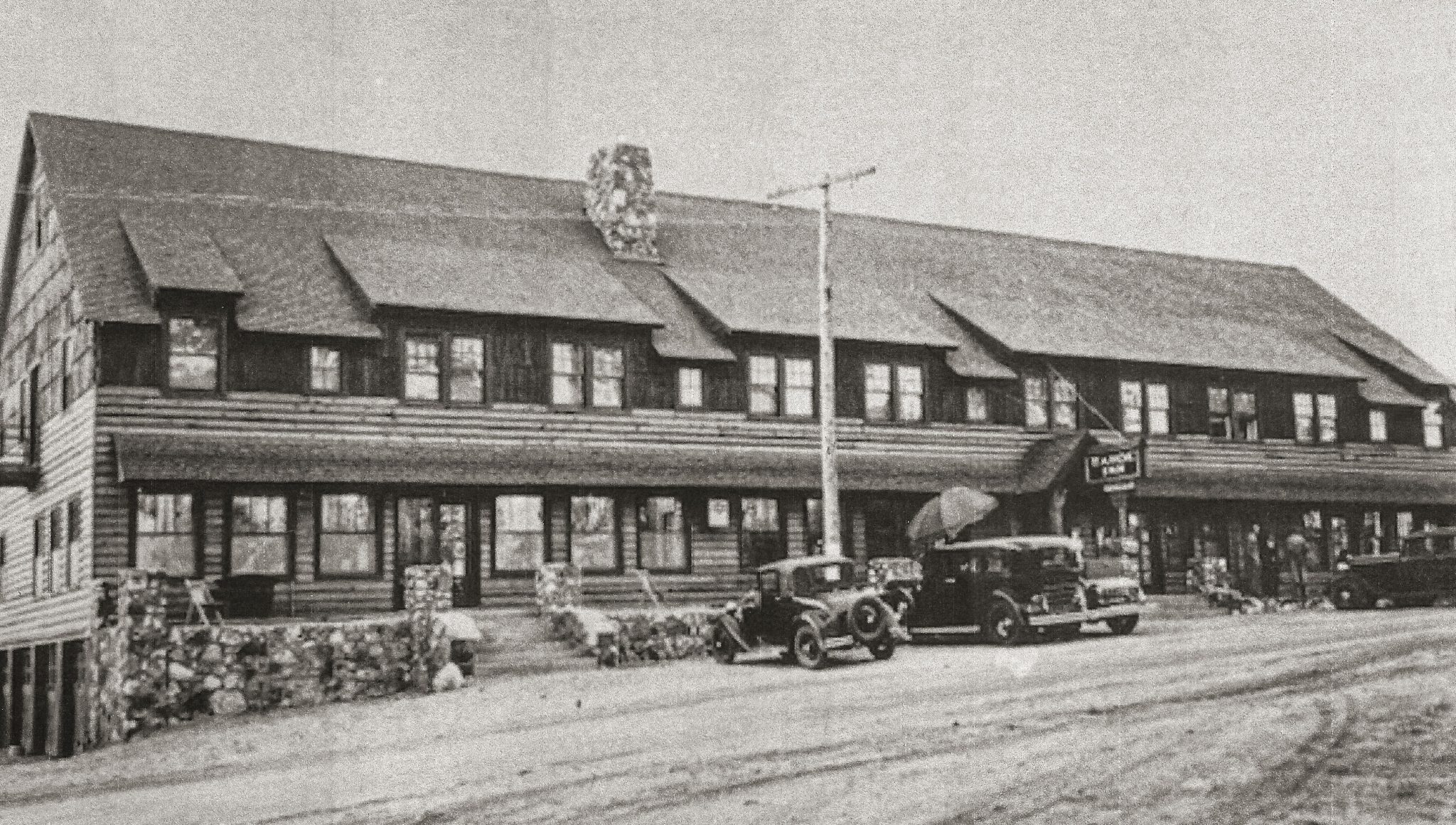
Colleen Conners remembers standing at her dad’s gas station, “and every car that went by you could recognize.” Conners’ Service Station was located where Cobblestone East is today, which was just a hop, skip and a stumble from Pop’s Corner, the popular watering hole (Sierra Surf Club now), where much of the town did its socializing. When the adults hung out at the bar, we kids were free to wander around town.
Most parents back then took the slogan “kids should be seen and not heard” a step further; they didn’t want to see the kids either. Which was OK. We couldn’t get into too much trouble, because if we did anything especially egregious, it would quickly get back to Mom and Dad through their network of friends.
“The community was smaller and tighter, and there was more of a definite offseason,” says Conners. “In the fall, the whole neighborhood was mine.”
Conners’ cousins were the Bechdolts. They were one of the large families that supplied a good chunk of the kids at Tahoe Lake School. They owned the Tahoe City Golf Course and the Tahoe Inn, which included Pop’s Corner. “We could play tackle football on the seventh fairway in the fall when the golf course was closed,” says Conners.
The golf course was also the setting for the night a dozen pre-teens gallivanted around the course in a fleet of “borrowed” golf carts. They might have gotten away with it, except they neglected to plug them in for charging, leading to a slew of dead carts in the morning. Golf course owner Carl “The Hawk” Bechdolt was not happy. He dished out the scariest punishment of all: He threatened to tell their parents.
Another form of entertainment for young Tahoe City kids was to visit Sadie. She was an elderly lady who lived alone in a tiny house across from the fire station. It later became a barbershop and is now a real estate office.
“We collected pine nuts and roasted them on her wood-burning stove,” says Conners.
We also listened to Sadie tell tales about the good old days and complain about that damn fire station across the street that blocked her view of the lake.
Mike Bechdolt remembers the offseason being slow until the Worldwide Church of God came to town for its annual convention, bringing thousands of paying customers to Tahoe City. This was when the kids went to work.
“We would wash dishes and bus tables. I was doing the dishes at 10 years old and waiting tables at 12,” says Bechdolt, adding that he also helped split wood for the Tahoe Inn. While the older kids would cut the trees and bring the firewood to the hotel, the youngest and smallest members of the family were tasked with stuffing the logs into the tight confines of the basement.
Still, even with all those chores, Bechdolt says, “We were spoiled. It was a wonderful childhood.”
Breaks from school were a time to camp and hunt via horseback in the remote Granite Chief Wilderness.
Softball was the biggest thing in town during the 1970s and ’80s. “The community was involved and there were hundreds of people in the stands every night,” says Conners. “After the game, we went to Pete ’n Peters or The Hearthstone (now Rosie’s). That was what you did all summer.”
Even though the women’s teams had lighthearted names like Perata’s Petunias, Truckin’ Tomatoes, Stereoscope Loafers (Stereoscope was a bakery) and Meadow Muffins, this was serious business with high-quality play.
Tahoe Lake School was a nine-year sentence for Tahoe City kids from Mrs. Heinke’s kindergarten through Mr. Steinhauser’s eighth grade. The librarian was Mazie Carnell, who always had a pet snake or tarantula to scare the kids, but we loved her.
Swats with wooden paddles were the disciplinary method of choice. They certainly made an impression on Bechdolt, as more than 50 years later, “I remember lots of wooden swats,” he says. “I was a smart aleck. I deserved every one.” Your fearless reporter somehow managed to avoid any swats, perhaps because I was too afraid to speak out of turn.
By the mid-1970s, the school, then known as Tahoe Truckee High School, grew too crowded and a new school at the lake was built. North Tahoe High School meant Tahoe kids no longer had to make the interminable trip in the big yellow bus to Truckee every day.
The new school was quickly filled with the sons and daughters of construction workers building the hundreds of condos that were sprouting like weeds around North Tahoe. By the early 1990s, housing prices in Tahoe got out of reach for many locals, so they moved to Truckee or out of the area, and the enrollment at North Tahoe declined.
As the number of second-home owners and visitors in North Tahoe continued to increase, it was possible to take a stroll down our street (which now had a sidewalk) and not recognize anyone. But the independent, outdoor-oriented population of locals is still here—still loving this little town nestled on the shore of Lake Tahoe.
And while many old-timers bemoan all the changes that have happened, these changes have actually made our town a much more enjoyable place to live and visit.
Tim Hauserman is a freelance writer who moved to North Lake Tahoe when he was 2. His latest book is the memoir Going it Alone: Ramblings and Reflections from the Trail.
No Comments