



27 Jun Wine Country Without the Glitz
Friendly vibes and time-tested excellence highlight the Sierra Foothills AVA, which flies under the radar in a state famous for its wine
An easy day trip from Lake Tahoe, the Sierra Foothills holds its own as one of the most diverse and historic wine regions in California. And yet, this close-to-home gem receives little fanfare, often bypassed by wine lovers headed to more prestigious locations.
But that’s not a bad thing. Because while the region may lack the renown of Napa or Sonoma, it also lacks the crowds and the costs, exuding a charm all its own.
The undulating foothills of the Sierra are full of colorful, down-to-earth people and dotted with wineries, many of which have been family owned for generations. The area’s winemaking history stretches back to the California Gold Rush, and its winemakers, once perhaps apologetic for the area’s rusticity, now delight in it.
“There is some cool energy in the Sierra Foothills,” says Chris Barkman, co-owner and sommelier of Uncorked Tahoe. “It’s like Sonoma 70 years ago.”
This is the story of the Sierra Foothills AVA, where folks who enjoy a slower pace go to enjoy quality wine poured with a friendly smile.
Designated Wine Country
An American Viticultural Area (AVA) is a federally recognized grape-growing region in the United States. Such regions must have well-defined boundaries and be clearly differentiated from neighboring areas in ways significant to winegrowing, such as climate, elevation and soil.
AVA applications are approved by the Alcohol and Tobacco Tax and Trade Bureau, which regulates the production, taxation, labeling and advertising of wine to comply with federal laws.
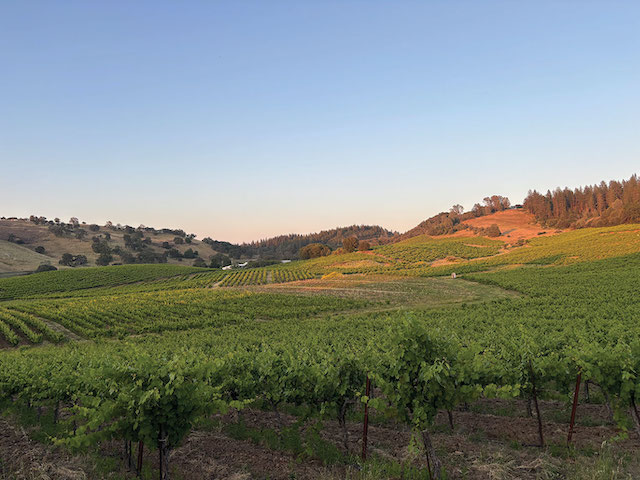
The historic Sobon Estate vineyard is located in the town of Plymouth in Amador County, photo by Shannon Landis, courtesy Amador Wine Heritage District
There are 277 AVAs spread across 34 U.S. states. Not surprisingly, California has the lion’s share with 154.
The designation is relatively new to the wine industry, with Augusta, Missouri, becoming the first recognized region in 1980. The Sierra Foothills AVA was established in 1987 with 33 wineries and now has over 200. There are also smaller “nested” AVAs within the Sierra Foothills, such as California Shenandoah Valley and Fiddletown in Amador County.
Among all the designated regions in the state, the Sierra Foothills AVA is the third largest, trailing only the Central Coast and North Coast AVAs in acreage. It spans 170 miles from Yuba County in the north to Mariposa County in the south and comprises eight counties: Calaveras, El Dorado, Nevada, Placer, Amador, Yuba, Tuolumne and Mariposa. The latter two are the smallest, with only 11 wineries combined.
Of the Sierra Foothills AVA’s 2.6 million acres, however, only about 5,700 acres are devoted to grapes, representing just 1.3 percent of the state’s total. That’s because there are fewer acres under vine than in other regions; the bucolic rolling hills contain more oak, pine and chaparral than vines. Much of the area is remote, with appellations widely scattered.
The Sierra Foothills AVA produces the highest-elevation grapes in California, with vineyards up to 3,500 feet, while its Mediterranean climate with hot days and cool nights creates wines of exceptional character, zippy acidity and bursting aromas, reflecting the land’s biodiversity.
The region is also known for its myriad wine varieties, including chardonnay, sauvignon blanc, chenin blanc, viognier and sémillon among whites, the latter being one of the most age-worthy. Common red wines include cabernet sauvignon, cabernet franc, merlot, syrah, barbera, tempranillo, sangiovese, petite sirah, grenache and Rhône blends.
And this is just a partial list, as there are more than 150 grape varieties across the region, with some single vineyards growing 20 to 30 different types.
But there is one variety that stands out as the undisputed king of the Sierra Foothills: zinfandel.
With more than 2,500 acres, zinfandel accounts for over one-third of all grapes planted and is vinified in different styles, from playful and lighter with notes of peppery spice to fruit-forward and jammy with a palate of ripe raspberry and blackberry, to full-bodied and high in alcohol. Late-harvest zinfandel also makes a wonderful dessert wine.
Rich With History
Immigrants from Germany, Italy, Spain and France, among other countries, came to the Sierra Foothills for the California Gold Rush beginning in 1848. As far back as 1853, these settlers grew mission grapes and made wine in their basements and backyard cellars for thirsty miners.
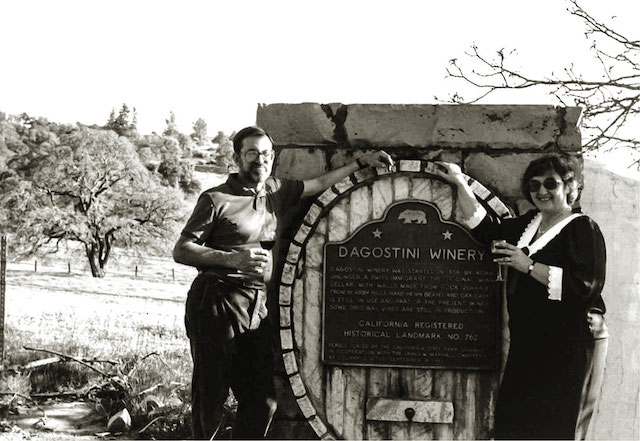
Leon and Shirley Sobon bought Amador County’s historic D’Agostini Winery in 1989, photo courtesy Sobon Estate
In 1856, a Swiss immigrant named Adam Uhlinger arrived in the Shenandoah Valley and established Amador County’s first winery in Pigeon Creek, north of what is now Fiddletown.
Italian immigrant Enrico D’Agostini bought the Uhlinger estate in 1911, and the D’Agostini Winery operated into the mid-1980s before the family sold the estate. Leon and Shirley Sobon then purchased the historic property in 1989 for their 30th wedding anniversary.
Designated as a California Historical Landmark, the Sobon Estate is now managed by three generations of family, including Leon’s sons, Robert and Paul Sobon, and his grandson, Austin.
“If you come to Amador, the wineries and the people make it special,” says the amiable Leon, who is now in his 90s. “There is an absence of glitz that you find in other areas. Chances are you can meet the winemaker in the tasting room.”
Vines of Lore
No discussion of the Sierra Foothills AVA would be complete without the history of old vines, and both Fiddletown and the Shenandoah Valley claim ownership of the state’s oldest producing zinfandel vines.
In Fiddletown, the 38-acre, dry-farmed Rinaldi vineyard most likely dates to 1865. Rombauer Vineyards in Napa Valley and Amador’s Terre Rouge and Easton Wines use these vines to make their old-vine zins.
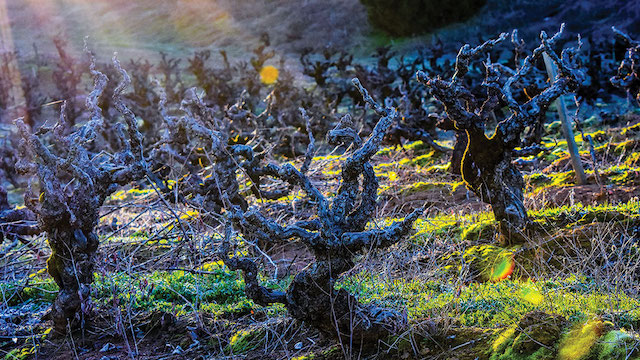
Dating to 1869, the Grandpère Vineyard in the Shenandoah Valley produces grapes vinified by Scott Harvey Wines, which is renowned for its old-vine zin, photo courtesy Scott Harvey Wine Company
In Shenandoah Valley, the Grandpère Vineyard dates to 1869. This zinfandel vineyard expanded during Prohibition and still produces grapes vinified by Macchia Wines in Lodi and Amador County’s Andis Wines, Vino Noceto Winery and Scott Harvey Wines, which is renowned for its old-vine zin, appropriately named “1869.”
Old vines are magnificent—romantic even—and have stood the test of time. These gnarled vines are head-trained, meaning they often resemble small trees. They grow independently, without a trellis system, on roots that stretch 15 to 30 feet deep to draw essential nutrients, minerals and water. Small berries of limited yield produce elegant, well-structured and intensely flavored wines.
Most of the region’s earliest wineries did not survive after the Gold Rush due to the exodus of prospectors, Prohibition and economic recessions. Fortunately, many vineyards were abandoned rather than ripped out, leading to a resurgence in the 1960s and ’70s.
During this time, Bob Trinchero, winemaker at his family’s Sutter Home Winery in Napa Valley, first tasted a zinfandel from Amador County. “The wine dazzled me,” he would later say, “with a huge bouquet of ripe, spicy blackberry fruit. … It was really one of the finest wines I have ever tasted.”
Sutter Home went on to release an Amador County zinfandel in 1971, which established its potential as a superb wine and Amador County as the place to make it. The following year, Trinchero famously invented a white zinfandel, which quickly sold out and became the best-selling wine of its time.
The sassy and full-bodied style of the Sierra Foothills zinfandel continues to this day.
Recommended Visits
The Coopers are another multigenerational Amador County family. In 1958, Hank and Ruth Cooper purchased a Shenandoah ranch with walnuts and prunes. When their son Dick Cooper took over in the 1970s, he decided to replace the prunes with barbera grapes. Dick died in 2021, and all four of his daughters now manage Cooper Vineyards.
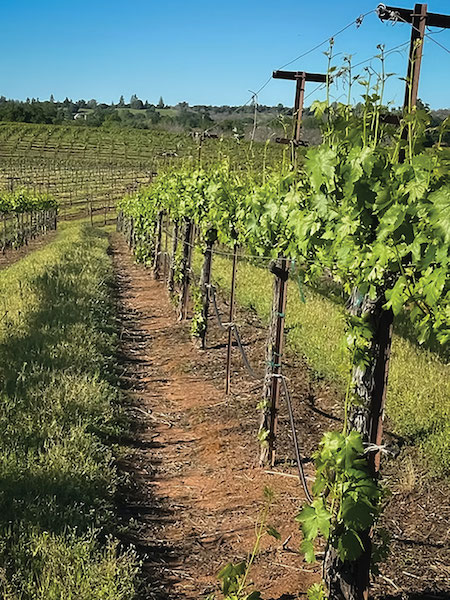
Vines grow on trellises at Cooper Vineyards, photo courtesy Cooper Vineyards
They grow 17 grape varieties on the property, but barbera is their flagship wine. Not only did it help put Amador County on the map for barbera, but its 2021 vintage won the coveted Red Sweepstake award in the 2024 San Francisco Chronicle Wine Competition.
“We are a small community here and grow beautiful grapes,” says Jeri Cooper Swift, one of the four sister owners who grew up on the Cooper Ranch. “We have a lot of pride in the work we do and the grapes we grow, and that is expressed in the wines we produce.”
Barkman from Uncorked Tahoe, who sources wines from around the world, says his favorite winery in the Sierra Foothills AVA is Forlorn Hope, which farms organically. Their tasting room is in downtown Napa, but they use grapes from their estate vineyard at 2,000 feet in Calaveras County outside of Murphys.
“They produce European-style wines, a skin contact rosé from pinot gris, vermentino, mondeuse and trousseau, which is indigenous to Jura, France,” says Barkman. “Numerous customers come into Uncorked to request Forlorn Hope. Their wines are phenomenal, mindfully farmed, extremely balanced and always sell out.”
Barkman also recommends Conduit | Divergent Vine in El Dorado County.
“Their wines are fun and soulful,” he says, “and they produce hard ciders, too.”
A small family-owned winery that farms organically, Divergent Vine offers “experiences,” personal tours and tastings led by winemaker Aaron Bryan himself, with a unique option for entry into their expansive game room and arcade.
El Dorado County wineries can be reached in about an hour by car from South Lake Tahoe. The towns of Plymouth and Sutter Creek in Amador County are about two hours from Tahoe’s South Shore. And Placer County wineries in Auburn, Grass Valley and Newcastle are about an hour from Truckee.
Indeed, the Sierra Foothills AVA is a place to enjoy wine on the slower side. Happily, the wineries in this under-the-radar region offer an enjoyable experience for oenophiles of all stripes. Cheers!
Celeste Leon is a published novelist and wine steward at Grocery Outlet in Truckee. She earned her Level 3 Award in Wine from WSET (Wine and Spirit Education Trust), the largest provider of qualifications for wine and spirits in the world. Leon has completed 14 wine classes to earn her Wine Studies Certificate of Achievement in spring 2027.
No Comments